
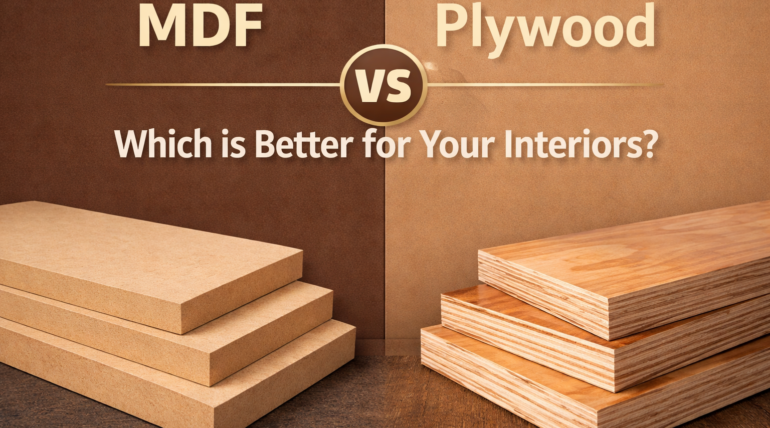
MDF vs Plywood: Which Is Better for Home Interiors in Mumbai?
When planning home interiors, one of the most common questions homeowners ask is whether they should choose MDF or plywood. Both materials are widely used in furniture, wardrobes, kitchen cabinets, and paneling, but they are not the same.
If you are designing or renovating a home in Mumbai, this choice becomes even more important because weather, moisture, durability, and usage all play a role in how long your furniture will last.
In this guide, we’ll explain the difference between MDF and plywood, where each material works best, and how to make the right decision for your interiors.
What is MDF?
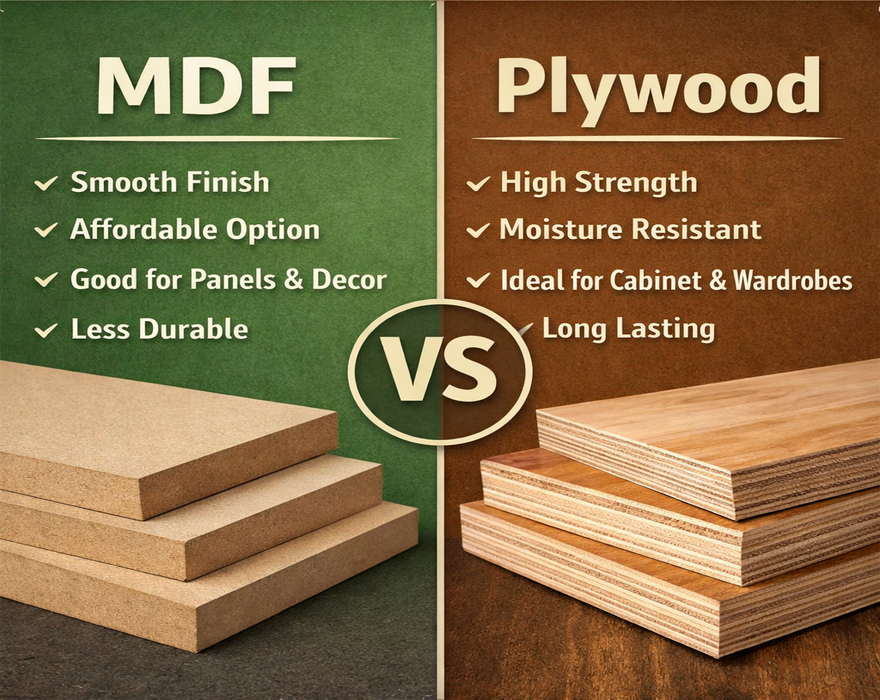
MDF stands for Medium Density Fibreboard. It is made by compressing wood fibres with resin under heat and pressure to form a smooth, dense board.
MDF is known for its:
- Smooth surface
- Uniform finish
- Easy machinability
- Suitability for paint and decorative finishes
It is commonly used for indoor furniture components, wall paneling, and decorative applications where a clean finish is important.
What is Plywood?
Plywood is made by bonding together multiple thin layers of wood veneer. These layers are arranged in a cross-grain pattern, which gives the board better strength and stability.
Plywood is widely used in interior work because it is:
- Stronger than MDF
- More durable under load
- Better for long-term furniture use
- More reliable in kitchens and wardrobes
For most structural furniture applications, plywood is usually the preferred choice.
MDF vs Plywood: Key Differences
1. Strength
Plywood is generally stronger than MDF. It can handle screws better and is more suitable for furniture that has to bear weight, such as wardrobes, beds, kitchen cabinets, and shelves.
MDF is denser and smoother, but it is not as strong when it comes to load-bearing or repeated hardware fixing.
2. Surface Finish
MDF has a very smooth and even surface, which makes it ideal for painted finishes, routed designs, and certain decorative applications.
Plywood may require more finishing depending on the surface treatment, but when laminated or veneered well, it performs beautifully in interiors.
3. Moisture Resistance
This is a major factor in Mumbai homes.
Because of humidity and moisture, plywood performs better than MDF in most practical interior applications. Good quality plywood, especially moisture-resistant or water-resistant grades, is better suited for kitchens, utility areas, and furniture used daily.
MDF is more vulnerable to swelling if exposed to moisture over time.
4. Durability
Plywood tends to last longer in demanding environments. If you are investing in furniture that should remain stable and durable for years, plywood is usually the safer option.
MDF works well where usage is lighter and exposure conditions are controlled.
5. Cost
MDF can often be more budget-friendly than premium plywood, depending on the grade and brand. For decorative or non-structural uses, it may be a cost-effective option.
But if durability matters more than initial price, plywood usually gives better long-term value.
Where MDF Works Well
MDF can be a suitable choice for:
- Decorative wall paneling
- Painted furniture surfaces
- CNC or routed patterns
- Non-load-bearing shutters
- Indoor design elements with minimal moisture exposure
If the goal is appearance and finish rather than structural strength, MDF can be useful.
Where Plywood Works Better
Plywood is the better option for:
- Wardrobes
- Kitchen cabinets
- Bed structures
- TV units
- Lofts
- Shelves
- Furniture exposed to daily use
- Areas with possible moisture or humidity
In Mumbai homes, plywood is often preferred for practical reasons, especially in kitchens and heavy-use furniture.
Which One Should You Choose for Mumbai Interiors?
If you want a simple answer, here it is:
Choose MDF when you want a smooth decorative finish and the application is not exposed to moisture or heavy load.
Choose plywood when you need strength, durability, better screw holding, and better long-term performance.
For most homeowners in Mumbai, plywood is usually the more dependable choice for core furniture work.
Common Mistake to Avoid
- One of the most common mistakes people make is choosing material only based on cost or surface appearance.
- A board may look good from outside once laminate or paint is applied, but what matters is how it performs over time. In wardrobes, kitchens, and beds, the internal material makes a major difference to durability.
Final Thoughts
Both MDF and plywood have their own uses in interior design. The right choice depends on where the material will be used, how much strength is required, and whether the space is exposed to humidity or moisture.
If you are planning your interiors and want help selecting the right materials for wardrobes, kitchen cabinets, decorative finishes, or other interior applications, it is always better to understand the practical difference before finalising.
At L Trikamdas, we help homeowners, architects, and interior designers choose the right interior materials based on both design and usage. Visit our showroom in Ghatkopar East, Mumbai, to explore suitable options for your project.
FAQs
1. Is MDF better than plywood?
Not overall. MDF is better for smooth decorative finishes, while plywood is better for strength and durability.
2. Is plywood good for Mumbai homes?
Yes. Plywood is generally a better option for Mumbai homes, especially in kitchens, wardrobes, and other high-use areas.
3. Can MDF be used in kitchens?
It is usually not the first choice for kitchen areas unless the application is low-risk and protected well from moisture.
4. Which is more affordable, MDF or plywood?
MDF can be more affordable in some cases, but plywood often offers better long-term value.